What is Forex?
The biggest market in the world — where currencies trade
Read
The biggest market on Earth — and you have almost certainly traded in it already.
You have already traded forex — you just did not call it that. Every time you swap cash at an airport booth, you are standing in the world’s biggest financial market: about $9.6 trillion changes hands here every single day.
Quite simply, forex is the global financial market that lets you trade currencies. Think one currency will strengthen against another — and you are right? You book a profit.
Picture the last time you flew abroad. You walk up to a currency booth and a screen shows a wall of exchange rates.
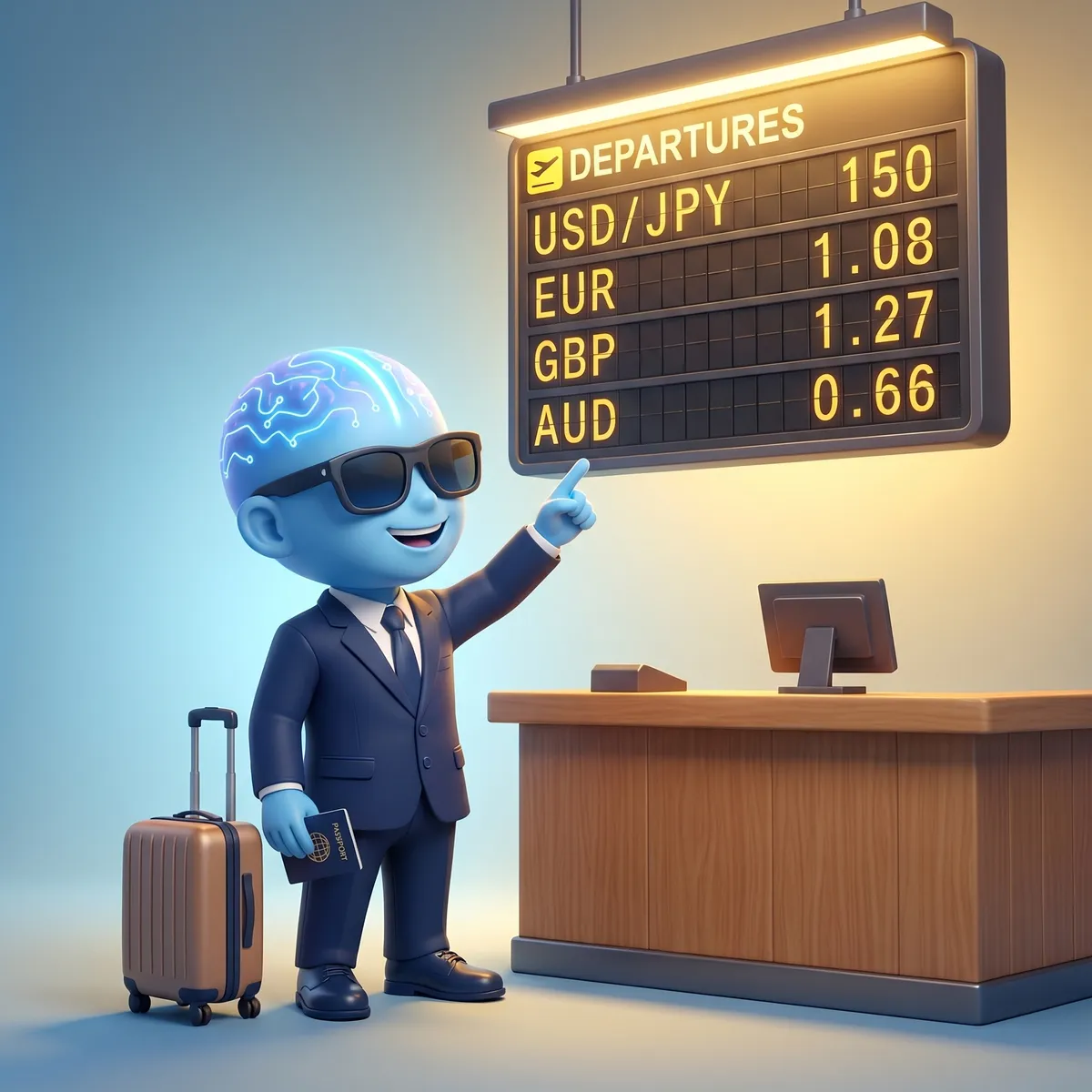
An exchange rate is the relative price of two currencies from two different countries.
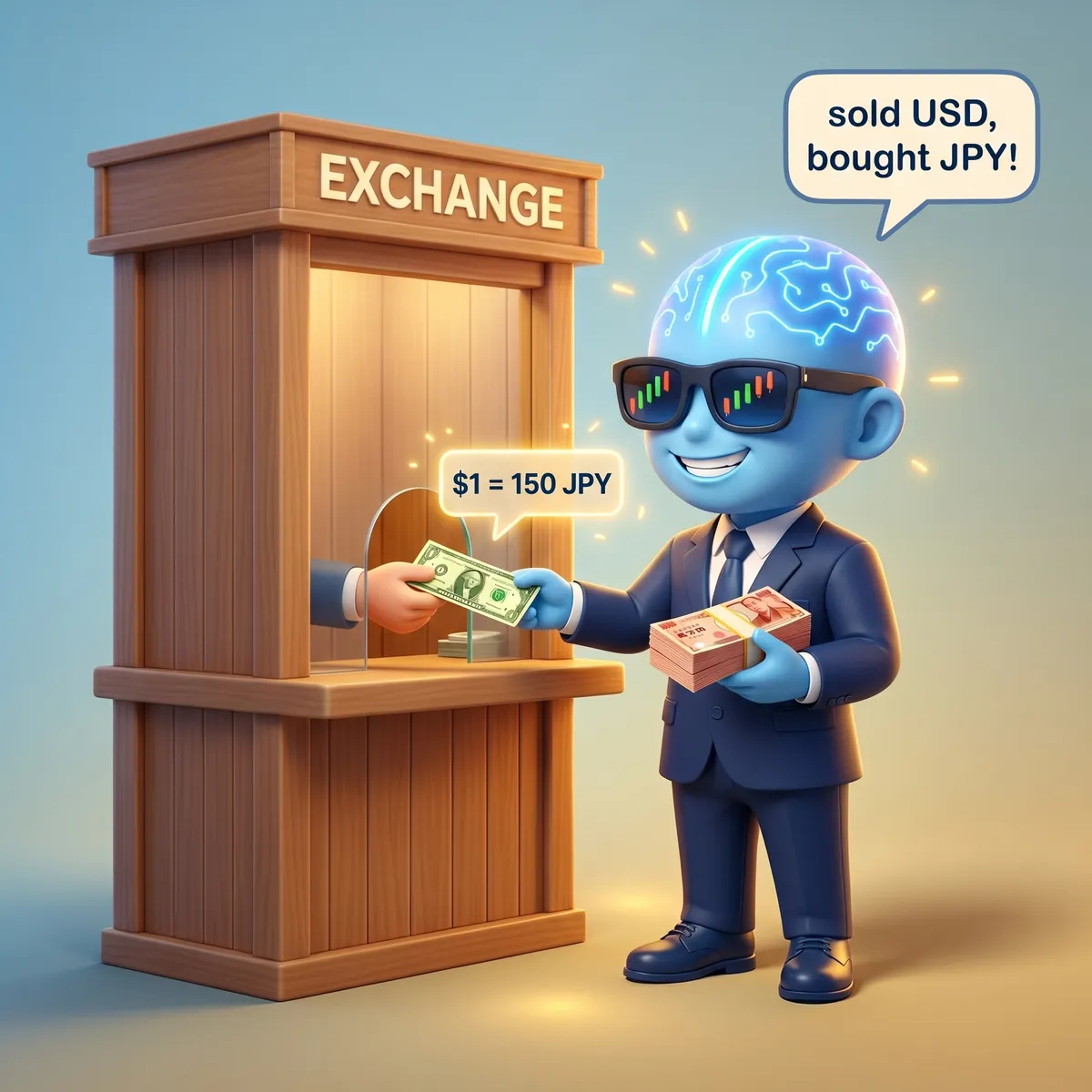
You spot “Japanese yen” and think: “My one dollar buys 150 yen? And I have ten dollars — I’m going to be rich!”
The moment you hand over your dollars, you have joined the forex market. You swapped one currency for another.
In trading terms — an American visiting Japan — you have sold dollars and bought yen.
Before you fly home, you change the yen you have left (Tokyo is expensive) and notice the rates have moved.
It is these changes in the exchange rate that let you make money in forex.
What is forex?
The foreign exchange market — “forex” to retail traders, “FX” on the institutional side — is the largest financial market in the world.
It is a global, decentralized market: no single building, no opening bell. Central banks, financial institutions, corporations, funds, algorithms, and individual traders trade directly with one another, and the rate reprices by the second.
Only a tiny slice of all currency trades come from the “real economy” — trade and tourism, like your airport swap.
The vast majority are speculative.
Currency speculators buy a currency hoping to sell it later at a higher price.
The tape — a trader’s word for the live stream of prices ticking by. “Watching the tape” means watching the market move in real time.
How big is the forex market?
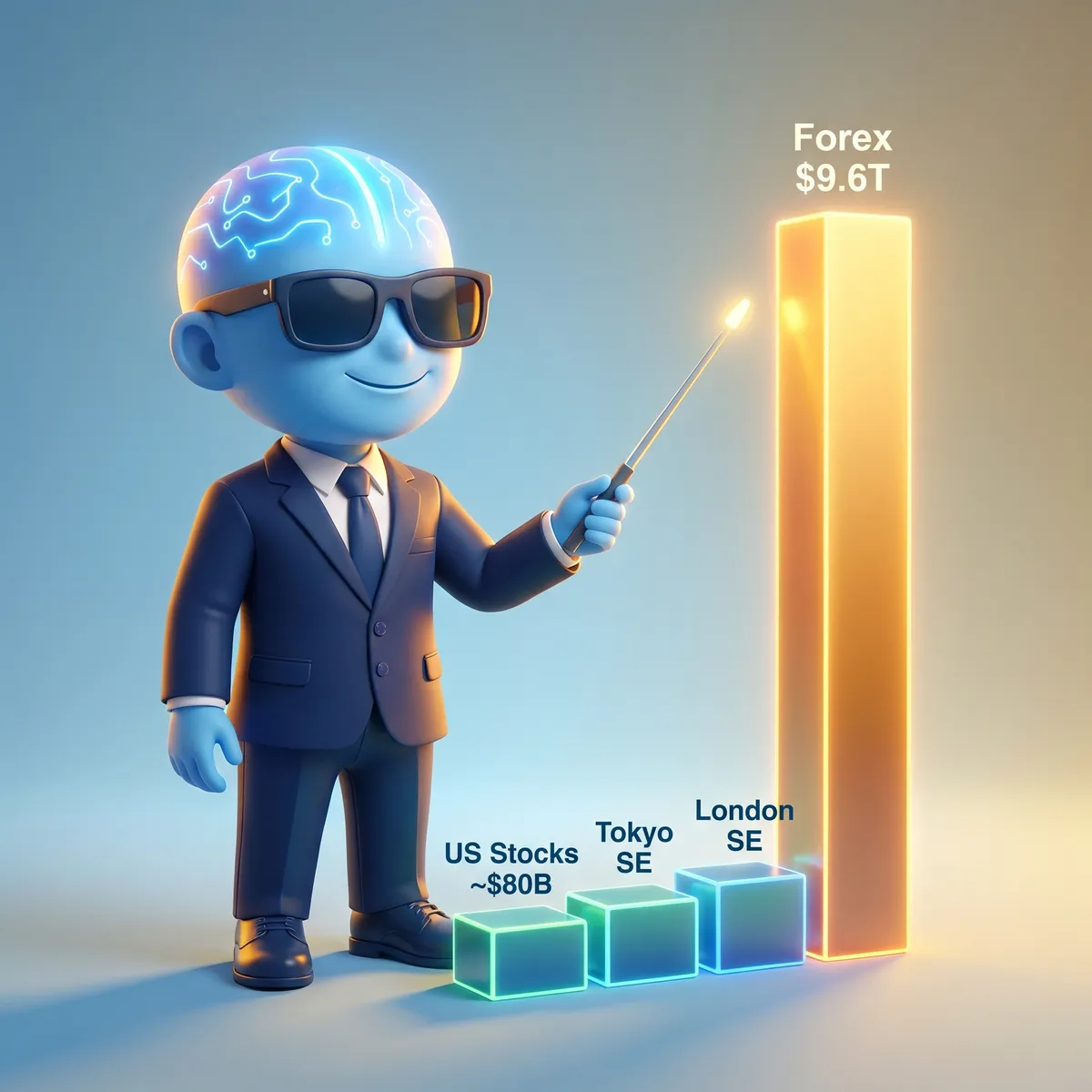
Next to the New York Stock Exchange (NYSE), forex is enormous: about $9.6 trillion a day in trade volume. That is trillion with a “t”.
Let us put that in perspective. The NYSE — the largest stock market on Earth — trades roughly $80 billion a day across about 1.5 billion shares.
On its own, the NYSE looks huge and it makes plenty of noise.
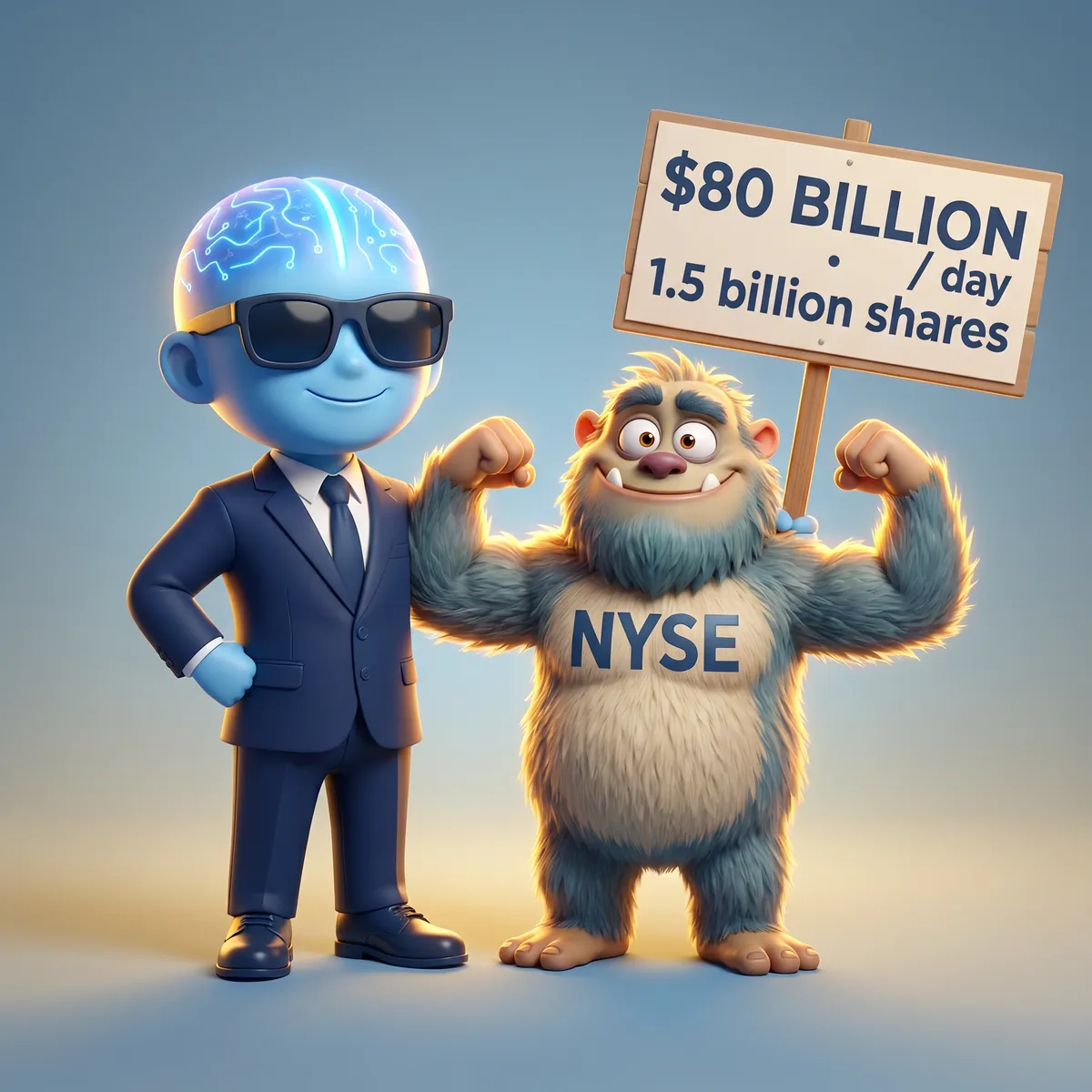
You hear about it every day — CNBC, Bloomberg, every market headline. When most people say “the market,” they mean the stock market.
But set the NYSE next to the forex market and it looks puny.
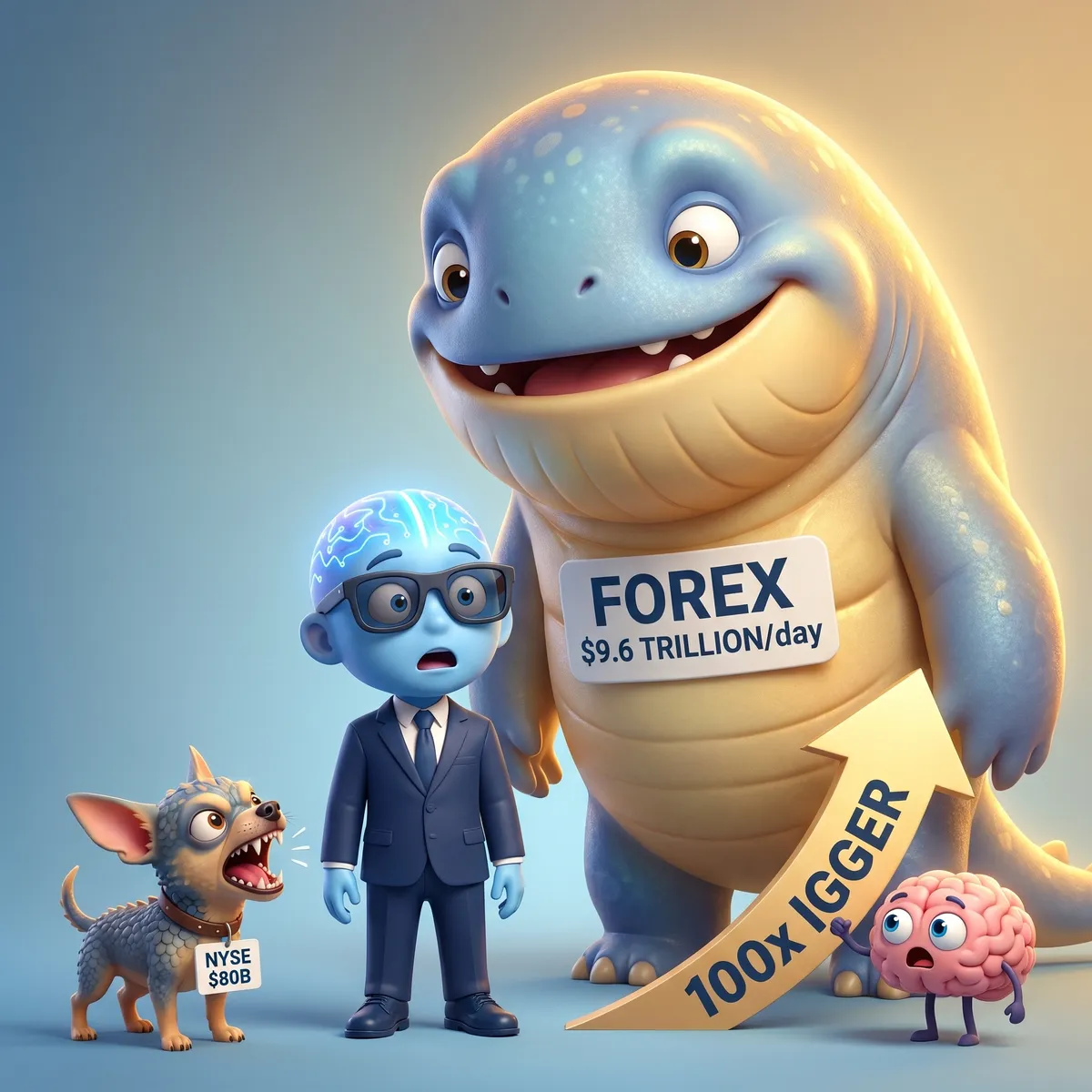
Like a chihuahua barking at a whale, forex is over 100 times bigger by daily turnover.
The cryptocurrency market? Even smaller.
Here is average daily volume for forex against the US, Tokyo, and London stock markets:
But hold on — there is a catch
That $9.6 trillion covers the entire global FX market: swaps, forwards, options, and other instruments used mostly by big banks.
The spot market — the part most relevant to FX traders — is smaller, around $3 trillion per day.
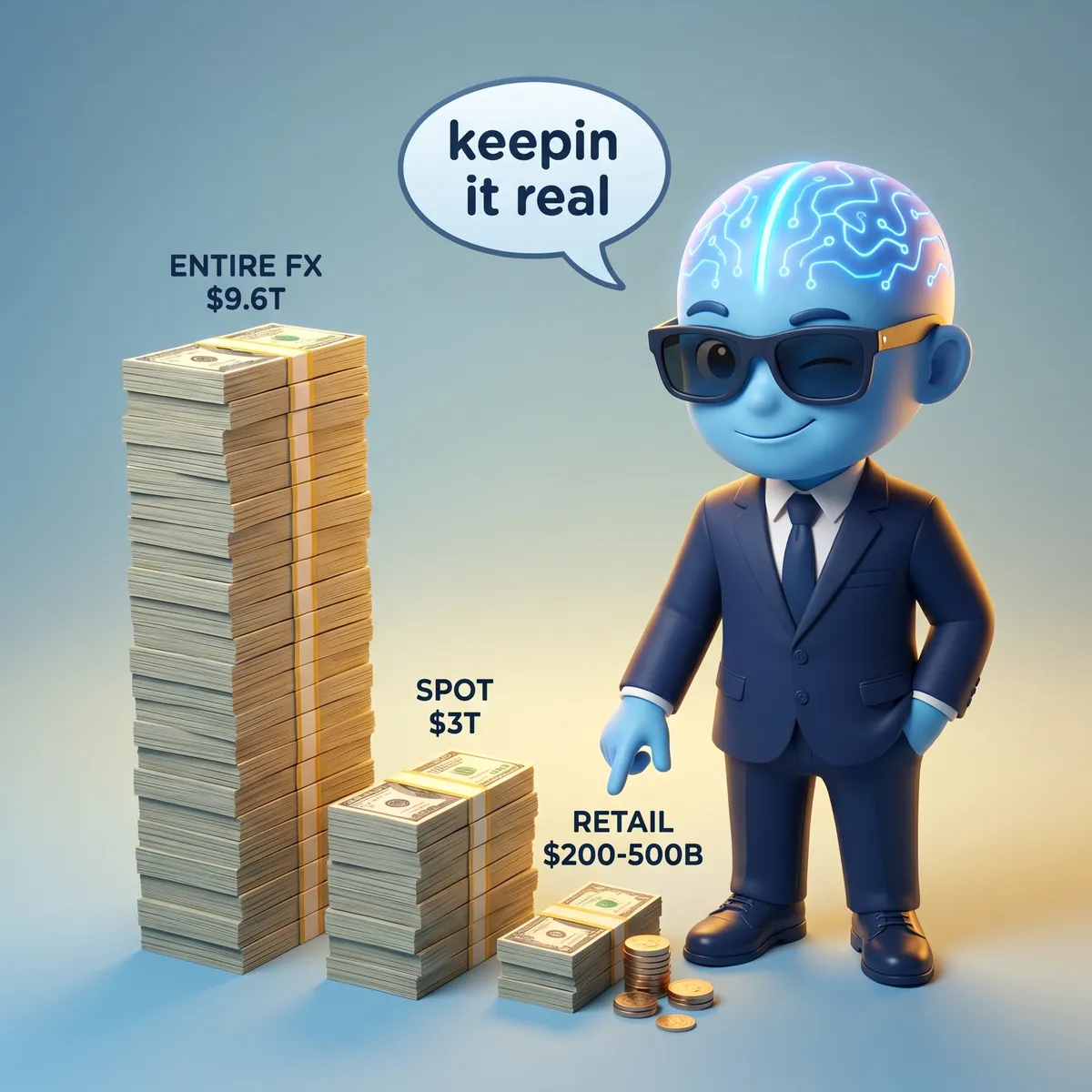
And if you count only retail traders (that is us), it is smaller still.
The exact size is hard to pin down, but the BIS 2025 survey suggests retail-driven turnover is roughly 2.5–6% of daily FX volume — somewhere around $200–500 billion a day.
So forex is genuinely huge — just not as huge as the headlines want you to believe.
We quote the real number, not the marketing one. The “$9.6 trillion” line is technically true but misleading — the market you actually trade is a fraction of it.
It (almost) never sleeps
Forex barely closes. It runs 24 hours a day, 5 days a week, shutting only over the weekend.
Unlike the stock or bond markets, it does not stop at the end of a business day. Trading just shifts to the next financial center.
The day opens in Auckland and Sydney, rolls through Tokyo, Frankfurt, and London, hits New York, then starts over — around the clock, five days a week.
Going long means you bought, betting the price rises. Going short means you sold first, betting it falls. Forex lets you do either — on any pair.
Forex is trading one currency for another. The exchange rate is the relative price of the two, and its moves are your profit or loss. It is the biggest market on Earth — and it runs 24/5.
Next up: WHAT exactly you are trading in the forex market.
See you on the desk. — AI Mentor