How traders actually profit
Quotes, base & quote currency, long/short, and the spread

Read
Buy 10,000 euros at 1.1800, sell them at 1.2500, and you have made $700. Stripped bare, that is the entire game.
Buy 10,000 euros at 1.1800. Sell them back two weeks later at 1.2500. You just booked a $700 profit — no factory, no product, no customers, just a price that moved your way. Strip everything else away and that is the whole game of forex.
As a forex trader, you are speculating on whether one currency will rise or fall against another. Buy the one you think will strengthen, sell the one you think will weaken, and you pocket the difference when you are right.
The mechanics look a lot like any other market — if you have traded stocks, this will feel familiar fast. Let’s walk one trade end to end.
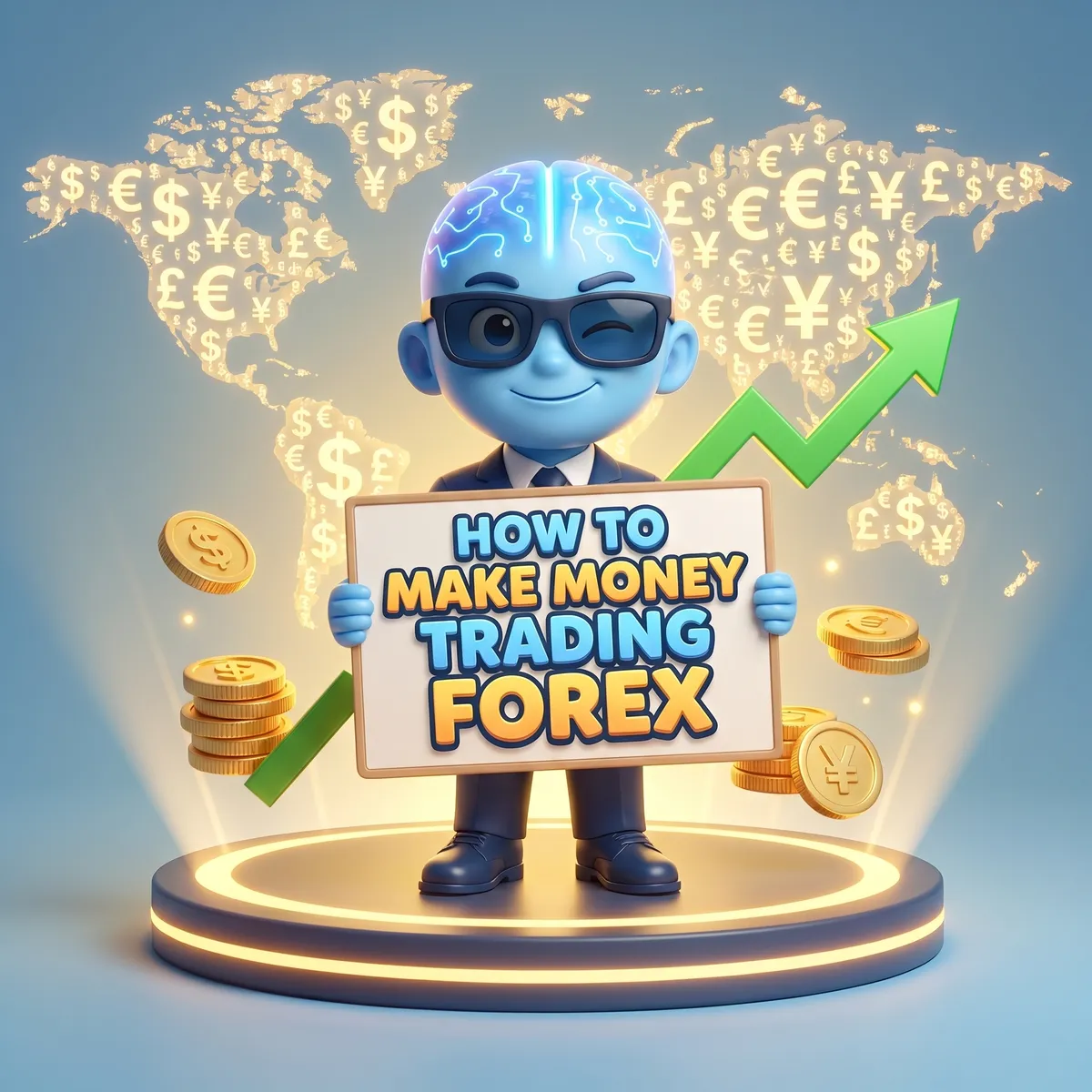
How does forex trading work?
The objective is simple: exchange one currency for another expecting the price to change. More precisely, you want the currency you bought to increase in value compared to the one you sold.
Here is that opening trade, laid out step by step.
You buy 10,000 euros at the EUR/USD rate of 1.1800, which costs you $11,800 (10,000 × 1.18). Two weeks later the euro has strengthened, so you sell your 10,000 euros back at 1.2500 and receive $12,500 (10,000 × 1.25). Profit: $12,500 − $11,800 = $700.
A jump from 1.1800 to 1.2500 is a **700-pip** swing in two weeks — a big, textbook-clean move chosen to make the idea obvious. Real moves are usually far smaller, and rarely travel in one clean direction. Take this as the mechanism, not a forecast.
An exchange rate is simply the ratio of one currency valued against another — how much of one you need to buy one unit of the other.
How to read a forex quote
Currencies are always quoted in pairs — GBP/USD, USD/JPY, EUR/USD. The reason is that in every forex transaction you are simultaneously buying one currency and selling another.
So which one are you buying, and which are you selling? That is where the base and quote currency come in.
Base and quote currency
The first currency, to the left of the slash, is the base currency — here, the British pound. It is the reference element for the pair, and always has a value of one.
The second currency, on the right, is the counter or quote currency — here, the U.S. dollar.
When you buy, the rate tells you how many units of the quote currency you pay for one unit of the base: in this quote you pay 1.21228 U.S. dollars to buy 1 British pound. When you sell, it tells you how many you receive: 1.21228 U.S. dollars for selling 1 British pound.
The exchange rate is simply how much of the quote currency you need to get one unit of the base currency.
So when you buy EUR/USD, you are buying the base currency (EUR) and simultaneously selling the quote currency (USD) — one order, two sides.
On the desk, buying EUR/USD is one move with two bets: long euros, short dollars. Going long means you bought, betting the base rises; going short means you sold it, betting it falls.
You would buy the pair if you think the base currency will appreciate (gain value) against the quote, and sell the pair if you think it will depreciate (lose value).
One housekeeping note: the slash is just a convention. Some traders write EUR/USD as EUR-USD or just EURUSD — same pair, same meaning.
“Long”, “short”, and “flat”
Every trade starts with one decision: buy or sell?

If you buy (buy the base, sell the quote), you want the base currency to rise so you can sell it back higher. On the desk this is going long — remember, long = buy.
If you sell (sell the base, buy the quote), you want the base to fall so you can buy it back cheaper. This is going short — short = sell.
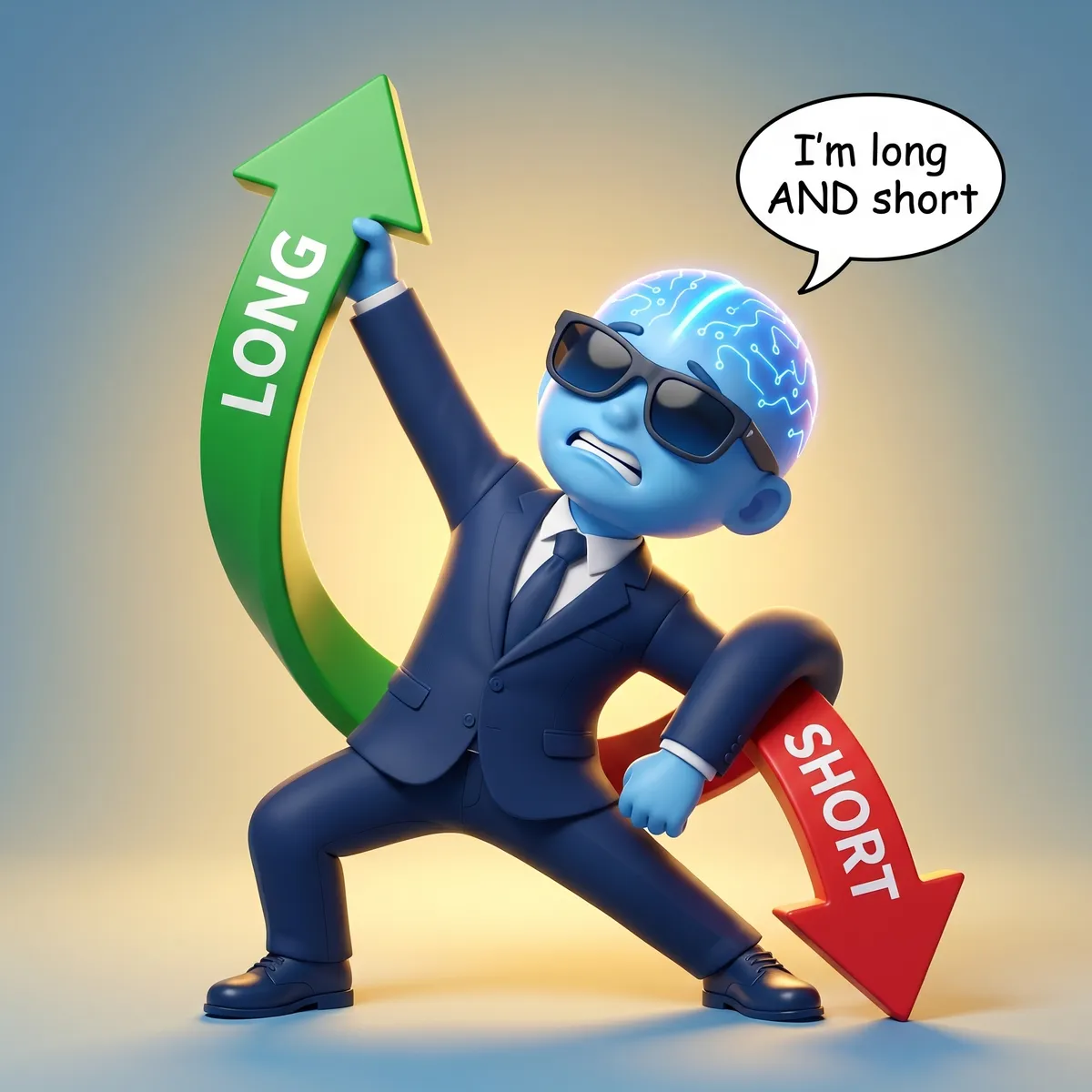
And if you have no open position at all, you are flat or square. Closing a position is called squaring up.

Long = buy the base, hoping it rises. Short = sell the base, hoping it falls. Flat / square = no open position at all.
The bid, ask, and spread
Every forex quote comes with two prices, not one: the bid and the ask (also called the offer). In general, the bid is lower than the ask.
The bid is the price at which your broker will buy the base currency from you — so it is the best price at which you can sell to the market.
The ask (or offer) is the price at which your broker will sell the base currency to you — the best price at which you can buy.
The difference between them is the spread. On the EUR/USD quote above, the bid is 1.34568 and the ask is 1.34588 — sell euros at 1.34568, buy them at 1.34588, and that two-pip gap is what it costs you to cross the market.
Traders call the spread the toll — what you pay to cross from bid to ask. Every round-turn (opening then closing a position) pays it once.
Remember that clean $700? It assumed you bought and sold at the very same rate. In reality you buy at the ask and sell at the bid, so the spread shaves a little off a trade before the market has even moved. The wider the spread, the bigger the bite — which is why the spread is the first cost a real trader watches.
Forex is betting the currency you bought rises against the one you sold. Every pair has a base (left, value of one) and a quote (right) — buy the pair and you are long the base, short the quote. Quotes carry a bid (you sell) and an ask (you buy); the gap is the spread, your toll.
See you on the desk. — AI Mentor