
What moves a stock
The forces behind every price tick

Read
Every green candle and every red one is really the same thing: a crowd changing its mind. Let’s learn to read the mind.
Stare at a live chart long enough and the price starts to feel like weather — random, moody, impossible to argue with. But it isn’t random. A price is just the last number a buyer and a seller agreed on, frozen for a second before the next handshake overwrites it.
When more people are desperate to get in than to get out, the price has to climb to tempt sellers to part with their shares. When everyone bolts for the door at once, it drops until someone’s willing to catch it. That tug-of-war is the whole game.

A price isn’t a fact about a company. It’s the live score of an argument about it.
Price rises when buyers are more eager than sellers, and falls when sellers are more eager than buyers. Everything else in this lesson is just why they get eager.
The engine underneath: earnings & expectations
Peel away the flashing colors and a share is a tiny slice of a real business. Over the long run, two forces do most of the heavy lifting:
Earnings — the actual profit the company puts in the bank. And expectations — what the crowd believes those earnings will be next quarter, next year, next decade. The stock is really a bet on the second one.

This is why a company can post its best-ever profit and watch the stock fall. If the crowd had already priced in something even bigger, then merely great results are a letdown — and the air hisses out of the balloon.
The market prices in a story before it happens. A stock doesn’t move on how good the news is — it moves on how much better or worse the news is than the story everyone already told themselves.
Surprise is the fuel
Here’s the idea that reorganizes everything: markets move on the gap, not the number. The gap between what actually happened and what the crowd was braced for. No gap, no surprise — and often barely a flicker on the chart, even after huge headlines.
A tiny company beating expectations by a mile can rocket. A giant meeting expectations perfectly can sit dead still. The raw result is old news the instant it’s expected. The distance from the expectation is the news.
By the time everyone knows something is coming, it’s usually already baked into the price. Traders who bought on the whisper often sell into the confirmation — which is why good news can leave a stock flat, or even lower.
The everyday weather system
Earnings are the engine, but plenty of other winds push a stock around day to day. News — a product launch, a lawsuit, a CEO walking out. The economy — interest rates set by the central bank, inflation, the monthly jobs numbers. And plain mood — the raw fear and greed sloshing across the whole market.
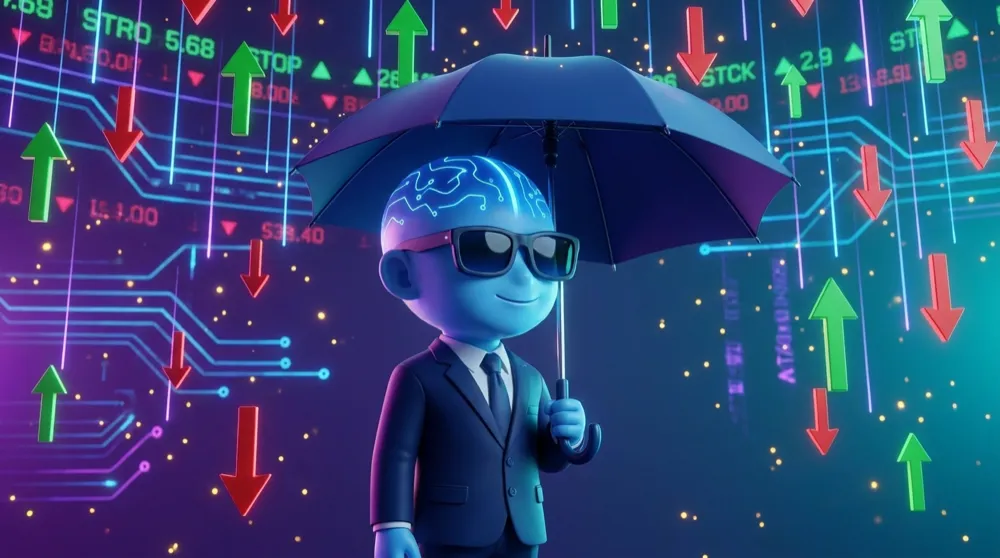
That last one matters more than beginners expect. A perfectly healthy company can drop simply because the entire market caught a cold that day — rates jumped, fear spiked, and the tide dragged every boat down together, guilty and innocent alike.
So the next time a move looks senseless, don’t ask “what did this company do?” Ask “what did the crowd expect, and what surprised it?” Learn to read the story behind the score, and the chart stops feeling like weather — and starts feeling like a conversation. Next up: the calendar that tells you when the biggest surprises are scheduled to land. 🎓