
Sentiment & options flow
Reading the mood and the footprints

Read
Numbers set the map, but feelings move the crowd. Let’s learn to read the mood — and the footprints big money leaves behind.
Prices are set by people, and people feel things. When the crowd is confident, they buy every dip and wave off bad news. When they’re spooked, they sell every rally and see danger in a clear sky. That collective feeling has a name: sentiment.
And sentiment is powerful enough to stretch a price far past what the plain numbers justify — in both directions. Fundamentals tell you what a company is worth. Sentiment tells you how the crowd feels about owning it right now, which is often a very different number.
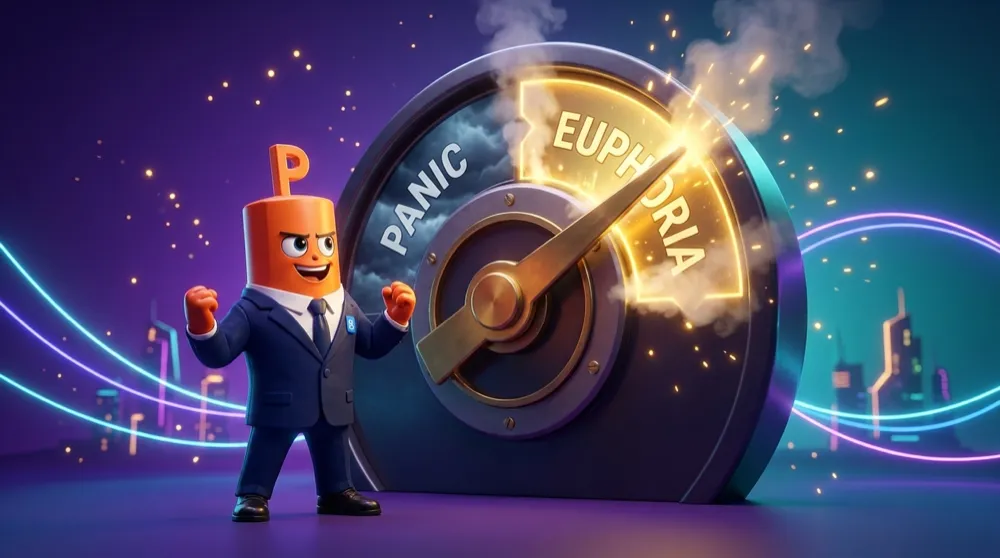
When everyone is euphoric, ask a quiet question: who’s left to buy? When everyone is terrified, ask: who’s left to sell? Extremes are exhausting — and exhausted crowds run out of fuel.
Bullish, bearish, and the danger of everyone agreeing
Two words describe which way the mood leans. Bullish means expecting prices to rise — optimism, appetite for risk, dip-buying. Bearish means expecting prices to fall — caution, a rush to safety, rally-selling. The old picture: a bull hooks its horns up; a bear swipes its paw down.

Here’s the twist that trips up beginners: when nearly everyone agrees, the move is often near its end, not its beginning. If the whole world has already turned bullish and bought, there are no fresh buyers left to push it higher. The crowd is most dangerous exactly when it feels most certain.
A trade everyone agrees with has already happened. The fuel is spent before you arrive.
Options flow: reading the footprints
Sentiment is a vibe, but options leave an actual trail. Every big trade in the options market is recorded, and unusually large or aggressive buying can hint at where serious money is positioning itself.
Heavy call buying often points to a bet on — or protection against — a rise. Heavy put buying points to a bet on, or hedge against, a fall. Watch the volume pile up on one side and you’re seeing a footprint in the sand: proof someone sizeable walked through.
Flow shows interest, not the future. Big traders hedge, get it wrong, and change their minds like everyone else. A wall of call buying might be a bullish bet — or someone protecting a huge short. Treat flow as one clue among many, never as a signed confession.
Putting the mood to work
You don’t trade sentiment blindly with the crowd or against it. You use it as context. Roaring optimism plus a market that can’t push higher is a yellow flag. Total despair plus selling that’s clearly drying up can mark a washed-out bottom.

So read the mood, respect the footprints, and stay a little skeptical whenever the crowd sounds completely sure of itself. Certainty is loudest right before it’s wrong. Next up: how stocks move in packs, and why five names in one sector can behave like a single bet. 🎓