
Macro fundamentals for FX
Rates, central banks & the big picture

Read
Technicals tell you when. Fundamentals tell you why a currency trends for months. At the core it comes down to the health of an economy and, above everything else, its interest rates.
AI Mentor here. 🏛️ Charts show you the move. Fundamentals explain why the move lasted six months instead of six hours. Master a handful of macro drivers and the big trends stop looking arbitrary — you start seeing the same story unfold in different currencies at different times.
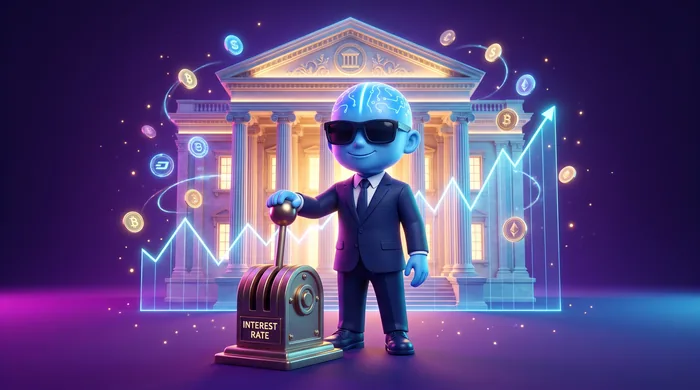
Interest rates are king
The number-one driver of a currency is its central-bank interest rate. Higher rates reward anyone holding that currency and attract global capital hunting yield, which pushes the currency up. Lower rates do the reverse.
Rate up — capital flows in, the currency tends to strengthen. Rate cut — yield-seekers leave, the currency tends to weaken. Expectations — the market moves on the NEXT expected move, not just today's decision.
That third line is the one that confuses people watching their first rate decision. A central bank can hike and the currency can *fall*, because a hike was already priced and the accompanying statement hinted it might be the last one.
Money flows to yield — and the market front-runs the flow. You are trading the next decision, not this one.

Hawks and doves
Central bankers get described by how they lean, and the vocabulary is worth knowing because it is used everywhere without explanation.
A hawkish stance favours higher rates to fight inflation — usually currency-positive. A dovish stance favours lower rates to support growth — usually currency-negative. Traders parse every sentence of a central-bank statement for shifts in that tone, which is why a single changed adjective can move a currency.

The rest of the dashboard
Rates lead, but they do not come from nowhere — they respond to the wider economy. These are the inputs the central bank is watching, which makes them the inputs you are watching too.
Inflation (CPI) — hot inflation pushes a central bank toward hikes. Growth (GDP) — a strong economy supports the currency. Employment — jobs data shapes the rate outlook, which is why US non-farm payrolls moves markets. Politics and risk — stability attracts capital, turmoil repels it.
Read them as a chain rather than a list: inflation and jobs drive rate expectations, and rate expectations drive the currency. Any data point matters to the extent that it changes what the market thinks the central bank will do next.
For any headline, ask: does this change what the central bank is likely to do at the next meeting? If the answer is no, it probably will not move the currency for long, however dramatic the headline.
That is the whole island. Rates lead, expectations front-run them, and the rest of the data matters because it moves expectations. 🌍