Market environment
Is it trending or ranging? Match your tools

Read
Before any indicator or setup, one question decides everything: is this market trending or ranging? Most losing trades are a good strategy used in the wrong environment.
Green Call here! 🏝️ This is the last stop on the island, and it might be the most useful one. Every tool you have learned works — in the right conditions. Almost none of them work in the wrong ones. So the first question on any chart is not "what does RSI say", it is what kind of market am I even looking at.

The two environments
A trend builds a staircase: higher highs and higher lows going up, or lower highs and lower lows going down. Each pullback stops short of the last one and the market makes net progress.
A range bounces sideways between a floor and a ceiling, going nowhere in particular. Price is busy, the chart is full of movement, and after a hundred candles it is roughly where it started.
Staircase = trend. Ping-pong between two lines = range. Same market, completely different playbook.

Match the tool to the map
Each environment has its own winning set, and the sets are close to opposites — one follows, the other fades.
Trending — moving averages, trendlines, breakouts, buying the dip. Ranging — support and resistance bounces, oscillators like RSI and Stochastic. The trap — oscillators scream "overbought" the entire way up a strong trend.
That trap is worth dwelling on, because it is where the overbought lesson from earlier bites hardest. In a range, "overbought at the ceiling" is a signal. In a trend, it is a description of a market doing exactly what it is supposed to do.
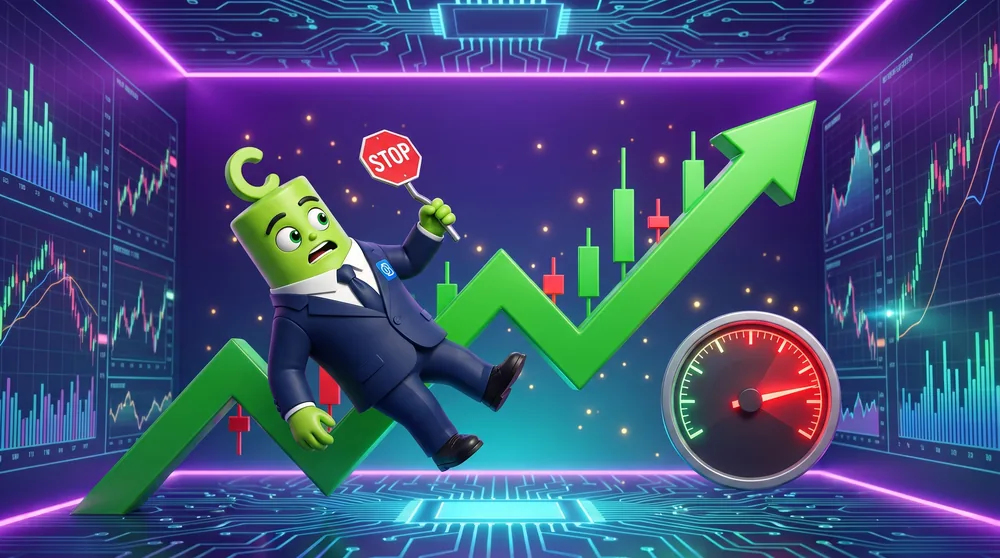
Environments change
Markets shift between the two constantly, and they spend more time ranging than trending. The transitions are not random either: ranges tend to end in breakouts, and strong trends eventually stall into ranges.
That means the environment you correctly identified last week is a hypothesis, not a fact about the market. Re-read it regularly, and switch playbooks when the evidence changes rather than when the losses arrive.
Zoom out and look at the last few swings. Are the highs and lows stepping in one direction, or landing on top of each other? If you cannot tell within a few seconds, treat it as a range — ambiguous markets behave like ranges far more often than they behave like trends.
Fading a strong trend because an oscillator said overbought, and buying dips in a range because a trend strategy said to. Both are competent techniques applied to the wrong map.
Get trend-or-range right and half your trading problems disappear before you have placed a single order. That is the whole island, done. 🏝️